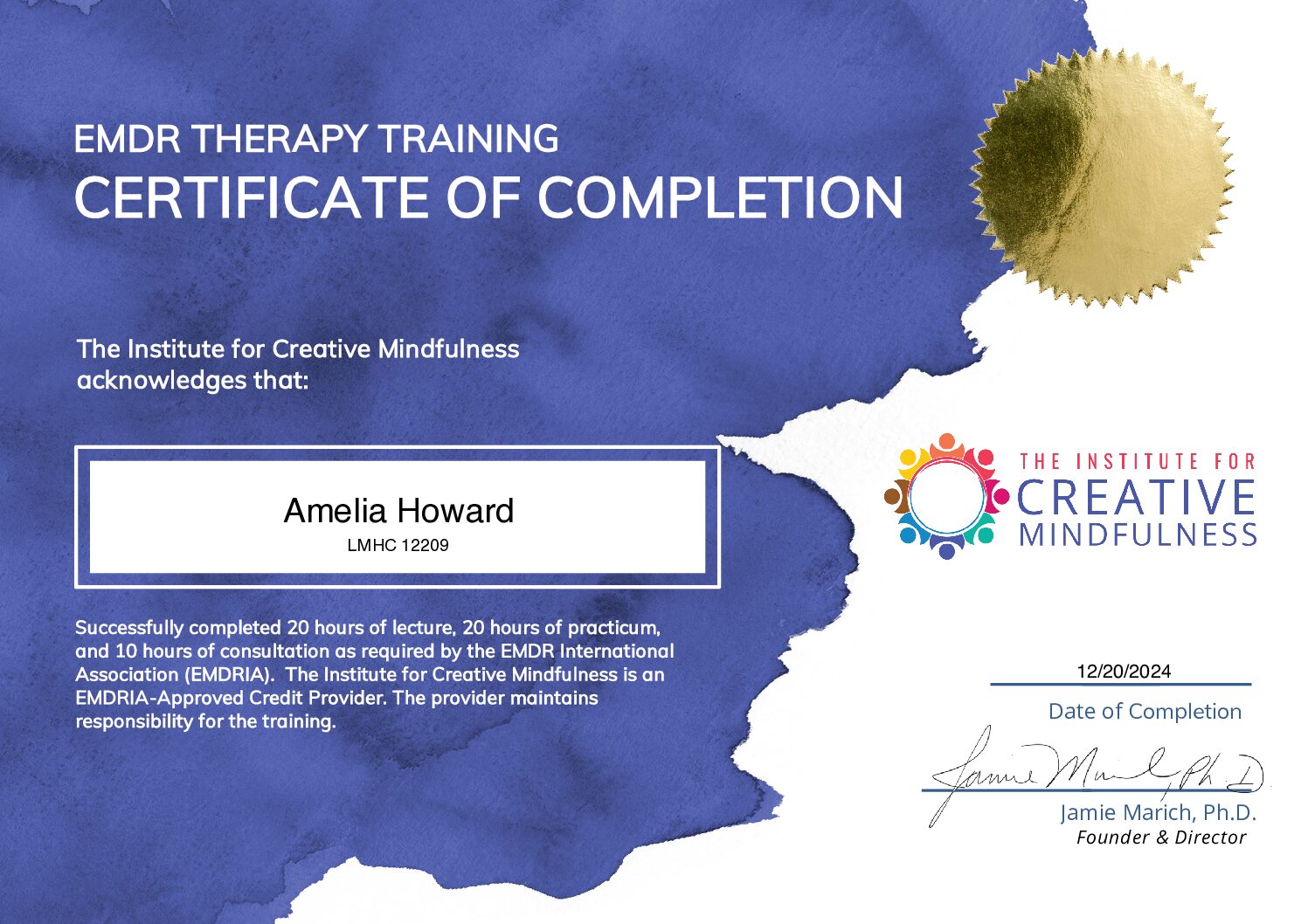
EMDR Therapy
Eye Movement Desensitization and Reprocessing (EMDR) is a proven therapy that helps people heal from difficult experiences, trauma, and overwhelming stress. Instead of just talking about the problem, EMDR helps the brain reprocess painful memories so they lose their emotional intensity. The memory is still there, but it no longer feels as overwhelming or “stuck.”
How Does It Work?
When something upsetting happens, the brain doesn’t always process it fully. The memory, along with the thoughts, feelings, and body sensations, can get “frozen.” EMDR uses bilateral stimulation (gentle back-and-forth movements like eye movements, tapping, or sounds) while focusing on the memory. This helps the brain “unfreeze” and reprocess the memory, allowing it to move into the past where it belongs. Clients often describe feeling lighter, calmer, and more in control after EMDR sessions.
What Can EMDR Help With?
- Trauma (big or small)
- Anxiety, panic, and phobias
- Depression
- Grief and loss
- Relationship stress
- Negative self-beliefs (e.g., “I’m not good enough”)
Why Choose EMDR?
- Backed by research and recommended by organizations like the APA and WHO.
- Effective for both single-incident trauma and long-term stress.
- Helps you heal at the root cause instead of just managing symptoms.
At Soul Purpose Counseling, we have therapists that specialize in EMDR as part of a holistic
approach to healing. If you’re curious, reach out! We’d love to explore if EMDR is right for you.

What to Expect in EMDR Therapy
- Preparation & Safety
We start by building coping skills and resources so you feel safe and grounded before working on painful memories. - Identifying Targets
Together, we’ll choose the memories, triggers, or negative beliefs you’d like to work on. - Processing Memories
Using bilateral stimulation, we’ll gently reprocess those memories. You don’t have to retell every detail. Just notice what comes up as your brain does the healing work. - Integration
We’ll work until the memory feels less distressing and you can replace old negative beliefs with healthier, more empowering ones.
Common Client Questions
Do I have to share all the details of my trauma?
No. EMDR works even if you don’t describe the memory in detail.
How many sessions will it take?
It varies. Some people notice changes in a few sessions, while others may take longer depending on the complexity of their experiences.
Will I feel worse before I feel better?
Sometimes old emotions may surface, but we prepare you with coping tools so you can manage them. Most clients feel a sense of relief as the process moves forward.
EMDR Therapy
-
50–60 minute sessions, typically once per week
-
Slower, steady pace for processing trauma over time
-
Time between sessions to reflect and integrate
-
Ideal for ongoing support alongside daily life responsibilities
-
Allows space to build coping skills gradually
-
Best for clients who prefer a structured, step-by-step approach
-
Can address multiple concerns over a longer period
EMDR Intensives
-
Extended sessions (2–6+ hours or multi-day formats)
-
Accelerated healing in a shorter timeframe
-
Focused on specific memories or targeted issues
-
Reduces the need for months of weekly sessions
-
Deep, immersive processing with fewer interruptions
-
Customized treatment plan before and after the intensive
-
Ideal for clients wanting faster results or with limited availability